
Healthcare marketing statistics has changed more in the last five years than in the previous twenty. Patients no longer “find” providers — they research, compare, review, and validate before they ever book. Digital expectations are shaped by Amazon, Uber, and Netflix. Meanwhile, compliance regulations tighten, competition intensifies, and acquisition costs rise.
If you want to grow in 2026, guessing is expensive. That’s why many organizations are investing in healthcare SEO services to improve visibility, strengthen patient acquisition, and build sustainable organic growth. This data-driven guide merges the most important medical marketing statistics into one definitive resource. You’ll learn:
- Where patients actually start their journey
- What channels convert best
- How much organizations spend
- Why phone still dominates
- How AI is reshaping healthcare advertising
- And what separates top-performing practices from average ones
Let’s dive in.
The State of Healthcare Marketing in 2026
Healthcare is one of the largest industries in the world — and marketing budgets reflect that scale.
Market & Spend Statistics
- U.S. healthcare spending reached $4.5 trillion in 2022 and is projected to exceed $6.2 trillion by 2028. [1]
- The global healthcare market is projected to reach $665+ billion by 2028. [2]
- U.S. healthcare advertising is forecast to grow from $22.4 billion to $29.2 billion by 2028. [3]
- Healthcare digital ad spending surpassed TV ad spend in 2021 and now accounts for nearly 46% of total ad spend. [4]
- Pharmaceutical companies rank among the top global advertising spenders across industries.
How Patients Actually Search for Healthcare Providers
If you ignore search, you ignore demand.
Search Behavior Statistics
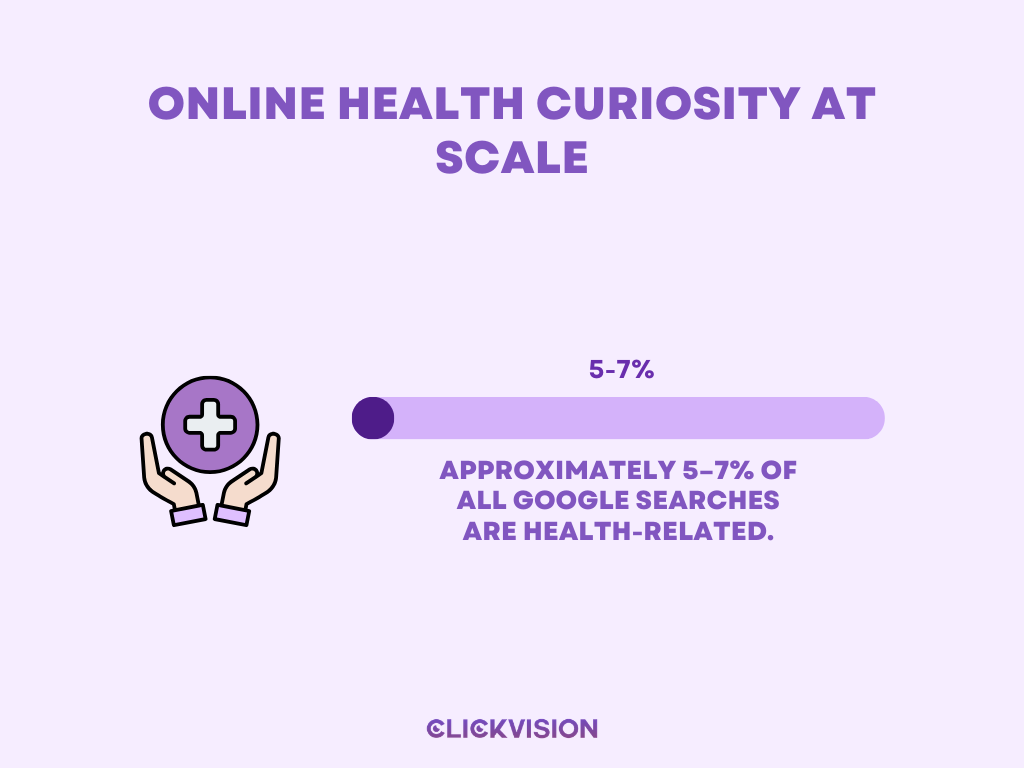
- Approximately 5–7% of all Google searches are health-related.
- Up to 76% of healthcare website traffic comes from organic and paid search.[5]
- 66% of internet users look online for information about a specific medical issue. [6]
- “Near me” healthcare searches have doubled since 2015. [7]
- 63% of searchers choose providers based on proximity. [8]
Why This Matters: Healthcare marketing is intent-driven. Patients search when they need answers.
Local SEO, structured data, optimized Google Business Profiles, and medical content marketing are foundational.
SEO vs Outbound: Conversion Rates That Matter
Not all leads are equal.
- SEO leads have a 14.6% close rate. [9]
- Outbound leads (direct mail, print) close at 1.7%. [10]
- Organic search conversion rate in healthcare averages 5.6%. [11]
- Paid search conversion rate averages 5%. [12]
- Overall healthcare website conversion rate averages 3.2%, but top performers reach 21%+. [13]
Original Insight: Top performers don’t generate more traffic. They convert better.
If your conversion rate is below 3%, optimization beats ad spend.
The Real Cost of Patient Acquisition
Understanding CAC (Customer Acquisition Cost) is critical.
- Average healthcare cost-per-click (CPC): $3.17. [14]
- Average healthcare cost per lead (CPL): $162–$320. [15]
- Paid digital leads can exceed $400 in competitive markets. [16]
But here’s the deeper issue:
Cheap leads ≠ profitable patients.
You must track:
- Revenue per channel
- Close rate by source
- Lifetime value (LTV)
Modern medical marketing statistics show that attribution separates scalable practices from struggling ones.
The Power of Reviews & Reputation Management
Trust is currency in healthcare.
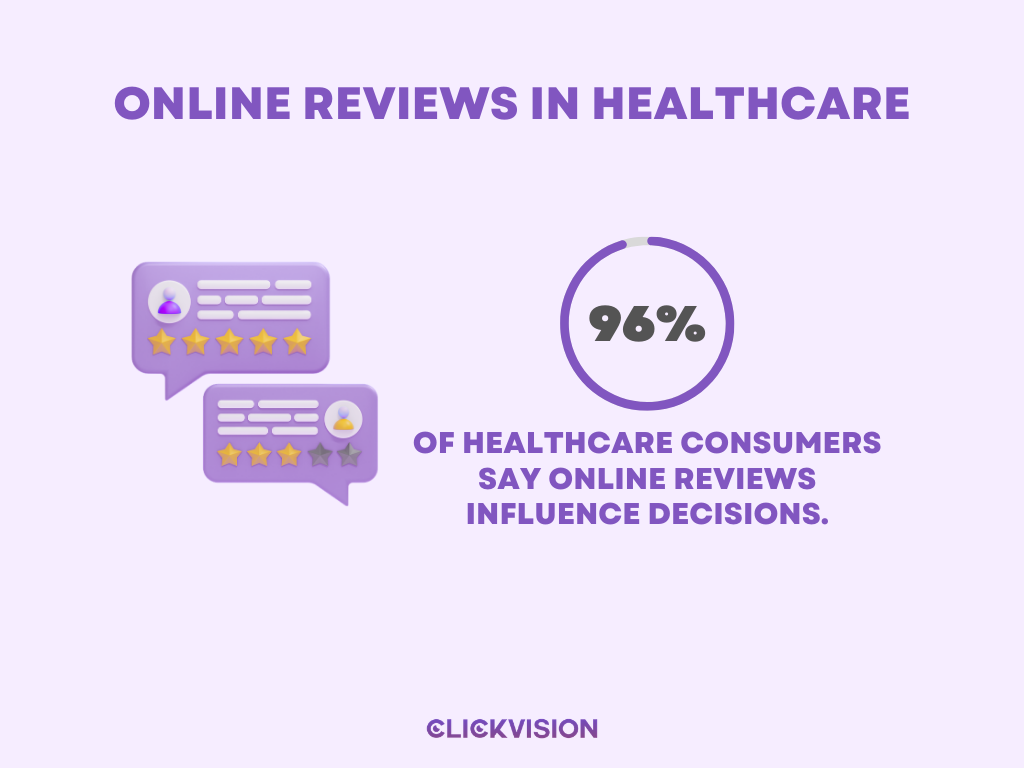
- 96% of healthcare consumers say online reviews influence decisions. [17]
- 94% cite reputation as the top factor when choosing a provider. [18]
- 66% trust Google reviews most. [19]
- 84% trust online reviews as much as personal recommendations. [20]
- 1–6 reviews are enough for 68% of patients to form an opinion. [21]
Key Takeaway: Reputation compounds. Every review is a marketing asset.
Automated review requests, NPS systems, and active response management are now essential components of healthcare marketing strategies.
Phone vs Online Booking: The Surprising Reality
Digital growth hasn’t killed the phone.
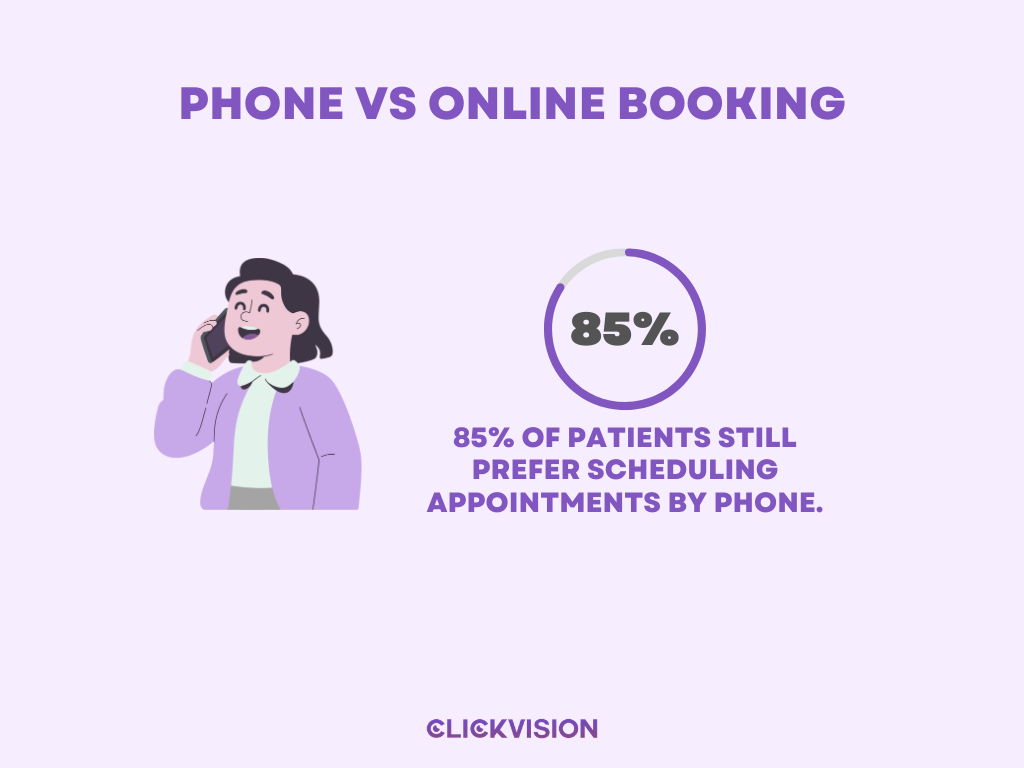
- 85% of patients still prefer scheduling appointments by phone. [22]
- 47% prefer phone communication. [23]
- 39% of Gen Z still prefer phones for healthcare interactions. [24]
- 39% of conversions happen over the phone.
- Inbound calls convert at 25–40%, compared to ~2% for forms. [25]
- Only 2–43% of appointments are booked online (varies by study and demographic).
Original Insight: Your front desk is your highest ROI marketing channel.
Call handling training often produces more revenue lift than increasing ad spend.
Budget Benchmarks: How Much Should You Spend?
Marketing spend depends on growth ambition.
Revenue-Based Benchmarks
- Medical practices: 1–5% of annual revenue [26]
- Steady growth: 8–10%
- Aggressive growth: 10–14%
- Pharma companies: 18–21%
- SaaS healthcare companies: often 20%+
Company Age Impact
- Startups: ~$4.3M average marketing budget
- Established companies: ~$7.6M
- Mature enterprises: $11M+
Strategic Insight: Budget is a reflection of growth intent.
If your growth goals exceed your marketing investment, your math doesn’t work.
AI in Healthcare Marketing: Hype or Leverage?
AI adoption is accelerating rapidly.
- 68% of healthcare marketers plan to use AI for lead generation. [27]
- 36% plan to use AI for content creation. [28]
- AI reduces content production cost and time significantly.
- AI-driven sentiment analysis improves reputation monitoring.
AI Applications in Medical Marketing
- Predictive analytics
- CRM automation
- Chatbots for triage
- AI-assisted medical content writing
- Image generation tools (e.g., Midjourney)
- Video automation platforms
Critical Reminder: AI must operate within HIPAA and privacy regulations.
Compliance-first automation wins long term.
Omnichannel Communication Statistics
Patients expect flexibility.
- 84% use both online and offline sources to research providers. [29]
- Email healthcare campaigns average 41% open rates. [30]
- Video views related to health exceed 110 billion globally. [31]
- 4.8 billion global social media users — massive reach potential. [32]
- Patients increasingly expect telehealth options.
- Multilingual communication increases accessibility and conversion.
Healthcare marketing statistics show omnichannel presence increases trust and retention.
Healthcare Content Marketing & Education: Lead Generation Powerhouse
- Content marketing generates 3x more leads than outbound marketing. [33]
- Content marketing costs 62% less than outbound marketing. [34]
- Companies that blog generate 67% more leads. [35]
- Long-form blog posts get 56% more social shares. [36]
- 50% of marketers now produce short-form video content. [37]
Healthcare consumers want credible, educational content.
Authority beats promotion.
Economic Pressure & Patient Behavior Trends
- 38% of Americans skipped care due to cost. [38]
- 28% delayed medical care because of affordability. [39]
- Family healthcare premiums rose 22% in five years. [40]
- 71% of providers cite economic headwinds as their biggest challenge. [41]
Marketing Implication: Messaging must address affordability, insurance clarity, and value.
Transparency builds trust in price-sensitive environments.
Referral & Word-of-Mouth Statistics
- Referral for healthcare marketers has an average conversion rate of 7.2%. [42]
- 68% cite reviews as the top driver of doctor selection.
- Word-of-mouth remains one of the highest ROI channels.
Gamified referral programs, digital tracking systems, and loyalty incentives can modernize traditional referral systems.
What Top-Performing Healthcare Marketers Do Differently
Based on aggregated medical marketing statistics, leaders:
- Track revenue, not just leads.
- Measure call-to-appointment rates.
- Monitor LTV by acquisition channel.
- Automate review generation.
- Invest in SEO long-term.
- Train intake teams for conversion.
- Use AI responsibly for scale.
- Maintain strict compliance standards.
The Future of Healthcare Marketing
2026 isn’t about choosing between digital and traditional marketing channels. It’s about intelligent integration.
Winning healthcare organizations will combine:
- Search visibility with strong online reputation management
- Seamless phone experiences with convenient online booking systems
- AI-powered automation with strict regulatory compliance
- Data-driven optimization with genuine patient empathy
Healthcare marketing is no longer simply promotional. It has become operational — embedded into every stage of the patient journey, from discovery to retention.
Read More Related Statistics
Conclusion
The data tells a clear story.
Search continues to dominate patient discovery.
Online reviews remain the primary driver of trust and decision-making.
Phone calls convert at significantly higher rates than online forms.
Artificial intelligence accelerates scalability and operational efficiency.
Marketing budgets ultimately reflect growth ambition and competitive intent.
Healthcare organizations that integrate performance data, trust infrastructure, and conversion optimization into a unified system will outperform competitors in 2026 and beyond.
If you found those healthcare marketing statistics valuable, consider sharing it with your team or exploring our related healthcare growth resources on ClickVision.
Sources
[1] https://www.cms.gov/newsroom/fact-sheets/national-health-expenditures-2022-highlights
[2] [4] https://nytlicensing.com/latest/trends/healthcare-marketing-stats/
[3] https://nytlicensing.com/latest/trends/healthcare-marketing-stats
[5] [8] [9] [10] [11] [12] [13] [14] [21] [42] https://www.ruleranalytics.com/blog/insight/healthcare-marketing-statistics/
[6] https://www.pewresearch.org/internet/2011/02/01/summary-charts/
[7] https://www.thinkwithgoogle.com/marketing-strategies/search/vegan-skin-care-search-statistics/
[15] https://socialclimb.com/blog/do-you-know-your-patient-cost-per-lead/
[16] https://firstpagesage.com/reports/average-cost-per-lead-by-industry/
[17] https://finance.yahoo.com/news/clutch-report-96-consumers-check-162700263.html
[19] https://www.brightlocal.com/research/local-business-discovery-trust-report/
[20] https://www.inc.com/craig-bloem/84-percent-of-people-trust-online-reviews-as-much-.html
[24] https://financesonline.com/appointment-scheduling-statistics/
[25] https://www.marketingdive.com/ex/mobilemarketer/cms/opinion/columns/15723.html
[26] https://www.whitecoatinvestor.com/valuing-your-medical-practice/
[27] https://www.callrail.com/blog/healthcare-marketing-trends
[28] https://www.callrail.com/blog/healthcare-marketing-statistics
[29] https://blog.google/products-and-platforms/products/search/health-info-knowledge-graph/
[30] https://www.paubox.com/blog/5-email-marketing-stats-for-healthcare-providers
[31] https://blog.google/innovation-and-ai/technology/health/consumer-health-updates-thecheckup/
[32] https://www.searchenginejournal.com/social-media-statistics/480507/
[33] https://nytlicensing.com/latest/trends/healthcare-marketing-stats/
[35] https://www.hubspot.com/lead-generation-tips
[37] https://marketingltb.com/blog/statistics/short-form-video-statistics/
[38] [39] https://www.kff.org/health-costs/americans-challenges-with-health-care-costs/
[40] https://www.kff.org/health-costs/2025-employer-health-benefits-survey/
[41] https://clearbalance.org/why-hospitals-cant-afford-to-ignore-the-shift-to-patient-responsibility/