
New visitors often form an opinion about a brand before they explore its products, services, or story. They look for clear information, consistent messaging, credible proof, and a straightforward next step. The signals they value depend on what the brand offers and what customers need to feel comfortable moving forward:
- A local service business may earn confidence by showing real reviews, service areas, and clear booking options.
- An ecommerce store can help shoppers assess product details, shipping policies, and returns.
- A healthcare provider may need to explain credentials, care processes, and privacy practices.
Each brand can build trust quickly by answering the questions visitors are likely to have and making important details easy to verify.
Below, we’ll explore how different types of brands can create that confidence on their websites. We’ll cover smart ways to show reliability, reduce uncertainty, and help first-time visitors decide what to do next.
High-Stakes Brands Build Trust by Making Expert Support Easy to Find
Visitors on a health, legal, or financial website arrive with a decision they didn’t plan to make. They want to know who can help, what to do first, and where to get answers today. That’s why expertise and human support need to show up immediately.
A poor homepage experience that sends visitors through five pages to find a contact earns little confidence. Trust forms faster when the homepage shows a named specialist, a clear next step, and a direct way to reach a person. Specialist guidance and support pathways belong near the top of the page, where visitors see them before they start searching.
Here’s how to get that right:
- Put a named specialist with a photo and credentials on the first screen of your homepage.
- Add one phone number and one contact button next to that person.
- Write a short line that tells visitors what happens after they reach out, such as a call within a day.
- Link to the three pages visitors need most, for example, treatment options, costs, and eligibility.
- Count the taps it takes to reach a person on a phone.
You can see how this approach works on Mesothelioma.net. They offer free information and resources for people living with mesothelioma, a rare cancer tied to asbestos exposure.
Their homepage includes a Patient Advocate section that invites visitors to talk to them about treatment, survivor stories, and financial assistance. They also note that their advocates answer questions, share resources, and explain financial options, helping hundreds of patients. What’s more, they include a “Connect with Dave Today” button and a phone number so visitors can reach out immediately.

Source: mesothelioma.net
Review Publishers Earn Trust by Explaining How Recommendations Are Made
A ranked list asks readers to accept someone else’s judgment. Visitors accept it faster when the publisher shows how it reached that judgment.
Testing methodology, selection criteria, and product tradeoffs give readers something to check against their own needs. Notes on when a different option fits better help them choose with confidence. Also, acknowledging limitations raises credibility because it shows the publisher is helping a reader decide.
A list that names a weakness in its own top pick gives readers a solid reason to believe the rest. That’s why review brands should publish their full testing process alongside every ranking they release.
Here’s how to get that right:
- Publish a methodology page and link it near the top of every ranking.
- List the criteria, how you weigh them, and how many products you tested.
- Add a short pros and cons block to every pick.
- Write a line that names who should choose a different product and which one.
- Disclose affiliate relationships and ownership beside the list.
- Update the page date whenever you retest a product.
Sleep Junkie, a wellness platform for mattress reviews, sleep science, and bedroom products, follows this approach.
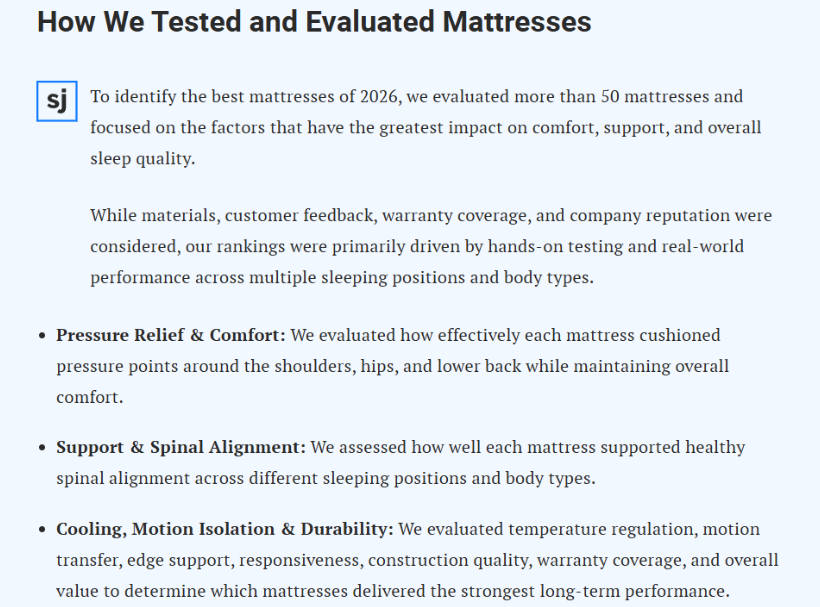
Their best mattresses of 2026 guide includes a section that explains how the platform tested and ranked each pick. They note that they’ve tested over 50 mattresses, picked 15 finalists, and mention criteria such as support, cooling, and value.
The guide says the top scorer in a criterion doesn’t automatically win. Every pick includes pros, cons, and a “Compare Instead” note naming alternatives.
Source: sleepjunkie.com
Custom Manufacturers Reduce Risk with Production Details and Relevant Experience
First-time buyers of custom products carry a specific worry: Will the order arrive as promised? They question product quality, production standards, and whether the supplier can handle their particular project. Facts a buyer can check against other sources answer those concerns within minutes.
Use content that answers buyer questions by stating where products are made and naming the materials and processes involved. Show past work from recognizable clients and from projects similar to the buyer’s. A buyer who sees a familiar brand, a matching product type, and a clear factory location can judge the fit quickly.
Evidence like this lets visitors assess the manufacturer’s capability themselves.
Here’s how to get that right:
- Put the production location in your homepage headline.
- Add a row of past client logos below it.
- Create case studies sorted by product type and industry, so buyers find a project that matches theirs.
- Name the materials and ingredients on each product page.
- Show your factory team and give buyers a direct phone number.
- Link each logo to the finished product.
- Ask clients for written permission to share their names before you publish them online.
An example here is Custom Sock Lab, which makes bulk custom socks for businesses and private buyers.
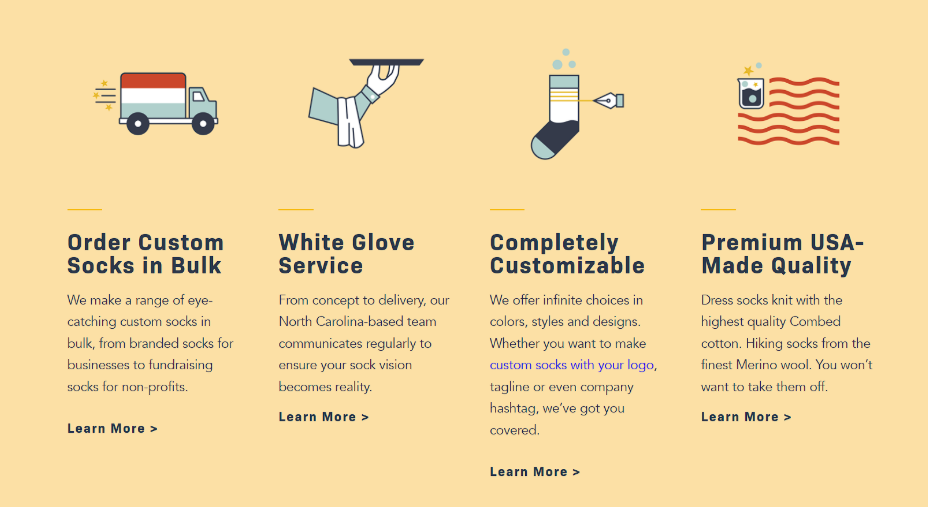
On their homepage, the company states that it knits its entire collection in North Carolina and sources premium cotton and wool from farms around the US. Their client list includes Meta, Brooks, Stanford University, etc.
These production facts and recognizable names give first-time buyers concrete reasons to trust the manufacturer.
Source: customsocklab.com
New Hardware Brands Gain Credibility Through Familiar Technology Standards
Shoppers considering an unfamiliar device want to know whether it will work with their technology, protect their information, and justify its upkeep. Compatibility with a recognized ecosystem can reduce uncertainty, while certification gives buyers an independent reference point.
One survey found 65% of consumers look for security credentials when buying connected devices. Another study found 72% of consumers considered independent testing vital when choosing smart-home and health devices.
Brands should explain what certification covers and pair it with practical facts, such as supported devices, setup steps, battery life, subscription costs, and how personal data is handled.
Here’s how to get that right:
- Place these trust signals on the product page near purchase options.
- Name supported systems and required apps, then show setup in steps or a short video.
- State realistic battery life, charging requirements, recurring fees, data storage practices, and relevant security certifications.
- Link to the certifying organization’s explanation.
- State exactly what each badge covers, and pair certification details with product-specific evidence.
- Keep FAQs specific and easy to scan.
- Keep every claim accurate and specific.
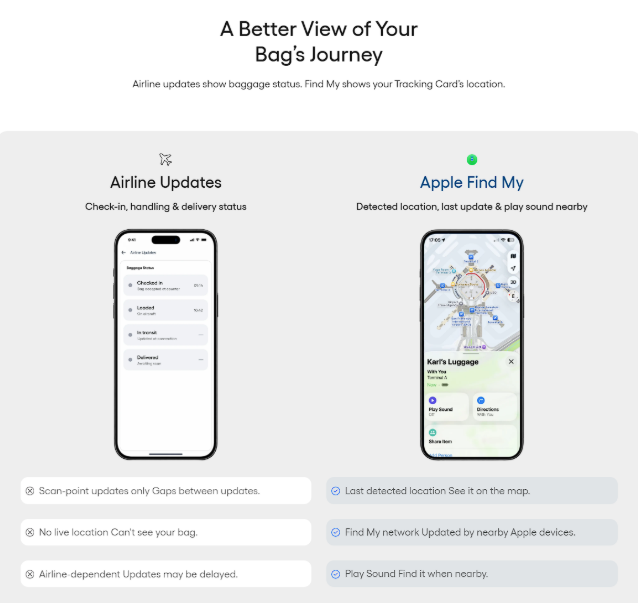
Spotminders, offering slim tracking cards for wallets, bags, and luggage, masters this approach. Their wallet tracking card product page states that the card is Apple MFi-certified and works with Apple Find My without a third-party app. It also states eight months of battery life, wireless charging, no monthly fees, and a 1.8mm thickness that fits inside wallets. The page covers IP67 waterproofing and RFID-wallet compatibility too.
These specifics give first-time buyers concrete reasons to trust an unfamiliar device.
Source: spotminders.com
Service Brands Build Confidence by Making the Customer Process Predictable
People hiring a service need to picture the experience before they can judge its quality. They can’t inspect a cleaning, repair, consultation, or installation in advance, so uncertainty about timing, costs, preparation, and results can delay a decision.
Service brands build confidence when they explain what happens before booking, during delivery, and after the work finishes. Clear steps show customers what information to provide, when they’ll receive a quote, who will arrive, and how the company handles concerns.
Predictability makes the commitment easier to assess and helps customers understand what they’re agreeing to throughout the entire engagement.
Here’s how to get that right:
- Map your process from first inquiry to follow-up, then publish the steps plainly.
- Include typical response times, how estimates work, what affects pricing, what customers need to prepare, and how they can request changes.
- Explain quality checks and the available solution if work falls short.
- Keep details realistic, and update them when operations change.
- A short numbered process, supported by useful FAQs, can answer practical questions before a visitor has to call.
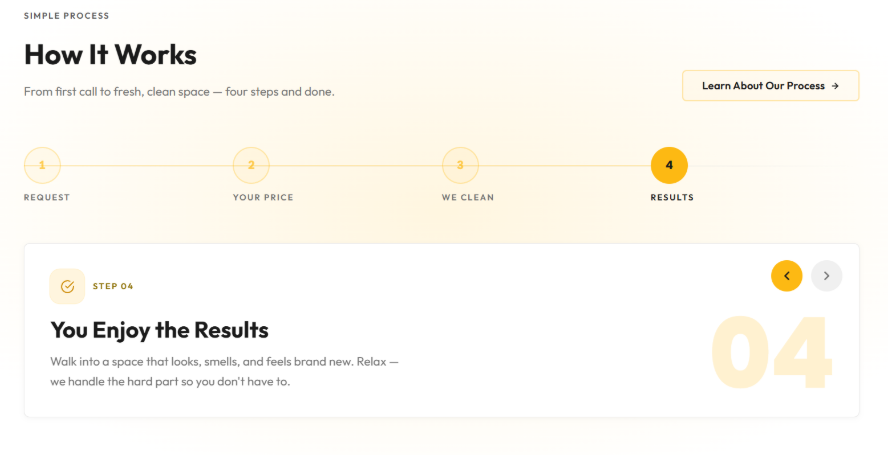
A neat example of this is SparkTex Cleaners, a residential and commercial cleaning company. Their process is outlined in four steps – request an estimate by phone or form, receive an itemized price usually the same day, have an assigned crew clean to a custom checklist, and review the result.
They also explained that the first visit is a longer deep baseline clean with a team lead walkthrough. Recurring visits are faster because the crew already knows the space and preferences.
This transparency gives new customers a clear picture of the entire experience.
Source: sparktexcleaners.com
Ecommerce Brands Gain Trust by Removing Uncertainty About Purchases and Returns
New visitors buying from an unfamiliar ecommerce brand are tasked with judging a product they can’t inspect while considering delivery, payment, and return risks. Clear shipping costs and delivery estimates help them calculate the real price and decide when an order will arrive.
Research on ecommerce shopping statistics highlights the importance of purchase costs: Baymard research finds that 40% of shoppers abandon carts because extra costs, including shipping, taxes, and fees, are too high. Visible return windows, refund conditions, warranties, secure payment options, and reachable customer support answer what happens if a product disappoints or a problem arises.
These details help first-time visitors assess the whole purchase with confidence.
Here’s how to get that right:
- Put shipping prices, delivery estimates, return rules, warranty terms, and support links near product details and checkout.
- Explain which items qualify for returns, who pays return shipping, when refunds arrive, and how customers can contact support.
- Display accepted payment methods and use a secure, familiar checkout.
- Show the total cost before shoppers commit, including taxes or duties.
- Keep policy language plain and consistent by improving content readability, making it easy to find and understand on mobile throughout the shopping journey.
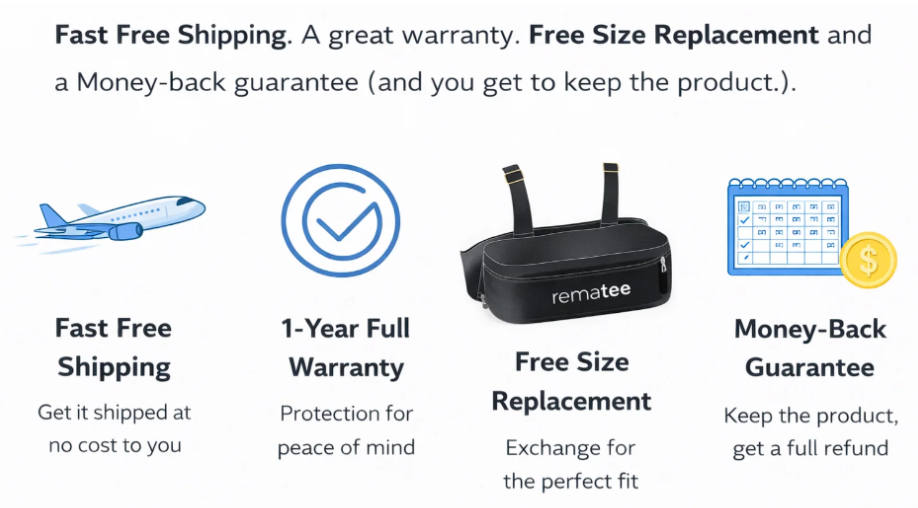
Rematee, selling positional-therapy sleep products, addresses purchase uncertainty directly.
Their refund policy states a 30-day money-back guarantee, one free size or style exchange, and a returnless option for international customers who keep the product and receive a refund minus a $35 fee. They also note their one-year warranty and fast free shipping with no US duties. These details give first-time buyers the assurance to proceed with their order.
Source: rematee.com
Final Thoughts
Building trust with new visitors starts with answering their most important questions clearly.
Whether you sell products, provide professional services, or publish recommendations, show people what they can expect, how your expertise applies to their needs, and where they can find reliable support. Also, make evidence, policies, and next steps easy to understand.
When visitors can assess your credibility and make informed decisions, they have stronger reasons to take the next step with your brand.