
Most SaaS marketing budgets are burning money on guesswork. If you’re a SaaS founder, growth marketer, or content strategist making decisions without data, you’re flying blind in one of the most competitive industries on the planet. With over 98,000 SaaS products competing for buyer attention – 88% of them in the B2B space – the difference between compounding organic growth and expensive paid dependency often comes down to one thing: knowing what the numbers actually say. That’s also why many SaaS companies invest in SaaS SEO services to turn these insights into a structured organic growth strategy.
This guide pulls together 170+ manually verified SaaS SEO statistics drawn from the most authoritative industry research published between 2024 and 2026. You won’t find recycled data from 2019 here. Every figure is sourced, contextualized, and grouped to help you make smarter decisions – whether you’re allocating budget, building a content strategy, or pitching the case for SEO investment internally.
Here’s what you’ll walk away with: a clear picture of SEO’s ROI for SaaS, how the AI search shift is reshaping organic visibility, what content actually converts, and which benchmarks separate top performers from the pack.
The SaaS Industry at a Glance
Understanding the scale and trajectory of the SaaS market is critical for shaping any effective SEO strategy. These SaaS SEO statistics highlight not just market growth, but the intensity of competition and the increasing value of organic visibility. If you’re underestimating how crowded and capitalized this space is becoming, your SEO approach is already behind.
- The global SaaS market was valued at $358 billion in 2024, with projections pointing toward $1.25 trillion by 2034 – a 13.32% CAGR. (Precedence Research)
- Fortune Business Insights puts the 2032 figure at $1.13 trillion, growing at nearly 20% CAGR from 2024.
- The US market alone is expected to reach $418 billion by 2030. The UK will hit $35.6B, Germany $40.1B, and China $96B. (Statista)
- There are approximately 98,146 SaaS products in major company databases, with 88% classified as B2B. (Dealroom)
- In 2024, SaaS and enterprise software companies raised $4.7 billion in investment despite broader funding pullbacks. (Crunchbase)
- The average organization now manages 106 SaaS tools across departments – down from 112 – a sign of maturing, more intentional software stacks. (BetterCloud)
- Average SaaS spend per employee reached $4,830 in 2025, up 22% year-over-year. (Zylo)
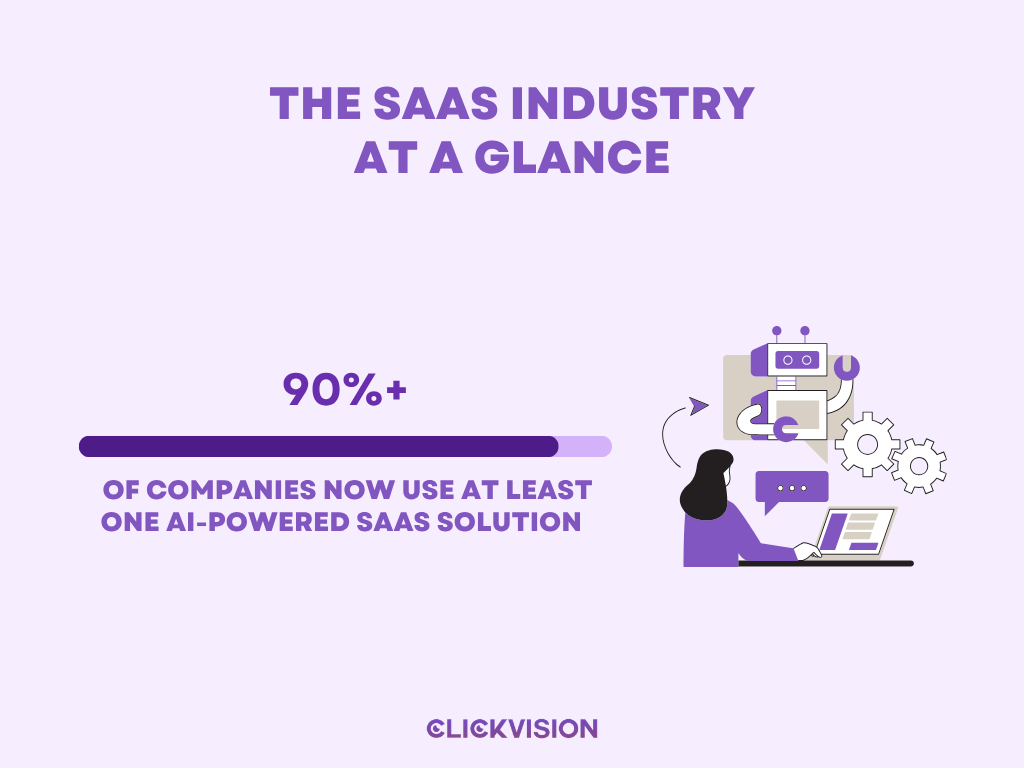
- 90%+ of companies now use at least one AI-powered SaaS solution. (Hostinger)
These SaaS SEO statistics make one thing clear: this isn’t just a growing market—it’s a compounding battle for visibility where late movers get buried. The upside is massive, but so is the cost of mediocre SEO execution. If your strategy isn’t deliberate and aggressively differentiated, you’re competing for scraps
SaaS SEO ROI: The Financial Case Is Overwhelming
SaaS SEO isn’t just a growth channel—it’s one of the highest-leverage investments available to a SaaS business. These SaaS SEO ROI statistics show how organic search compounds over time, turning early execution into a long-term competitive advantage. If you’re treating SEO as a secondary channel, you’re misallocating capital.
- B2B SaaS companies generate a 702% return on investment from SEO, with a break-even time of just 7 months. (First Page Sage)
- Over a three-year average, that ROI compounds significantly as domain authority grows and content assets accumulate.
- Organic search generates 44.6% of all B2B revenue, making it the single largest revenue channel – ahead of paid, email, and social combined. (SeoProfy)
- SEO budgets among SaaS companies grew 7.2% in 2025, reflecting continued confidence in the channel. (Gripped)
- Typical SaaS companies allocate 20–30% of their overall marketing budget to SEO.
- High-growth, VC-backed companies often spend 10–20%+ of ARR on marketing, with a meaningful portion going toward organic.
- Bootstrapped and efficient-growth teams commonly run at ~5% of ARR on marketing, leaning heavily on organic channels to compensate.
- 91% of businesses reported that SEO positively impacted their website performance and marketing results. (Position Digital)
- 60% of UK businesses are actively employing SEO as part of their marketing strategy. (Position Digital)
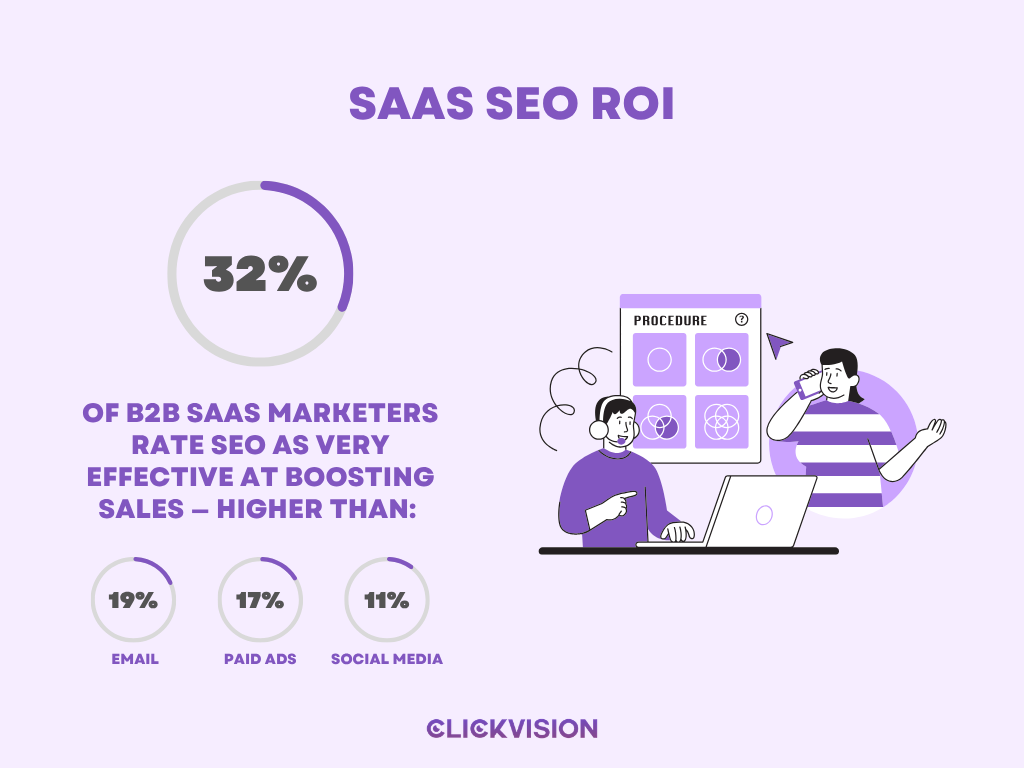
- 32% of B2B SaaS marketers rate SEO as very effective at boosting sales – higher than email (19%), paid ads (17%), and social media (12%). (Position Digital)
The takeaway from these SaaS SEO ROI statistics isn’t just that SEO works—it’s that ignoring it is financially irrational. Few channels offer this level of compounding return with decreasing marginal cost over time. The real risk isn’t investing in SEO—it’s delaying it while competitors build an advantage you can’t easily buy back.
SaaS Customer Acquisition Cost: Organic vs. Paid
Customer acquisition cost is where SaaS growth strategies either hold up—or fall apart. These SaaS CAC statistics expose how expensive paid acquisition has become, and why relying on it without a strong organic engine creates fragile, margin-compressing growth. If your CAC keeps rising, your business isn’t scaling—it’s getting more inefficient.
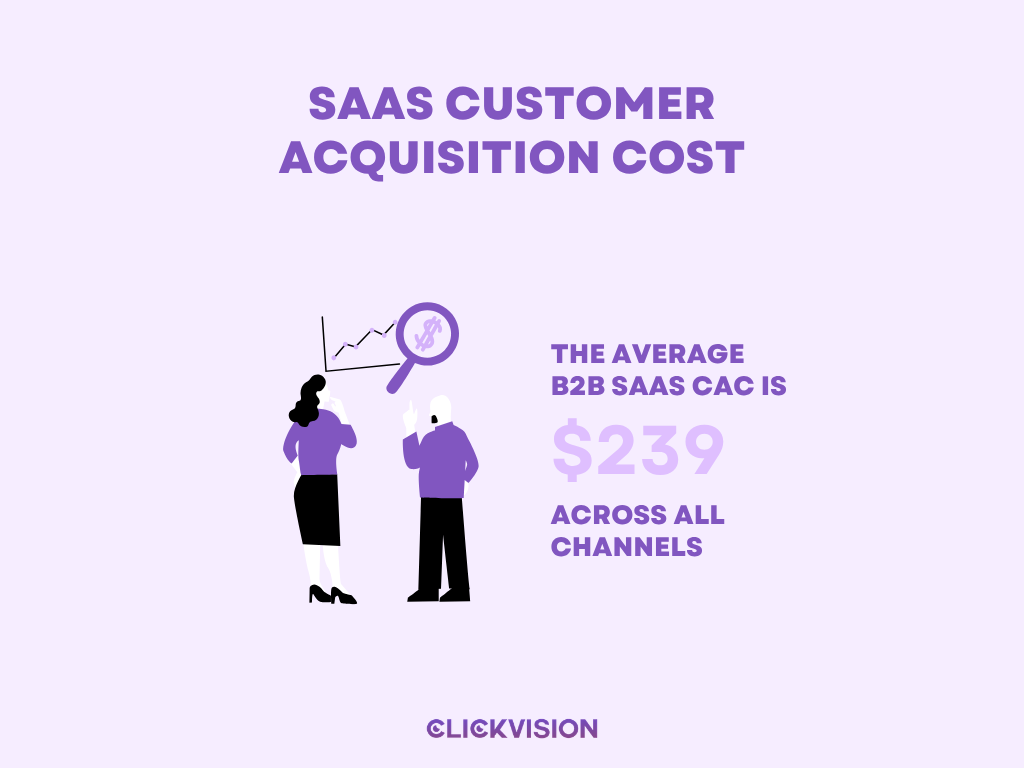
- The average B2B SaaS CAC is $239 across all channels, though this varies dramatically by sector. (Position Digital)
- Fintech has the highest CAC at $1,450; medtech is second at $921; project management third at $891. (Position Digital)
- Legaltech ($299) and proptech ($518) sit at the lower end. (Position Digital)
- The median SaaS company now spends $2.00 to acquire $1.00 of new ARR – a 14% increase from 2023. (Olivermunro)
- Fourth-quartile companies spend as much as $2.82 per dollar of new ARR. (Olivermunro)
- The average CAC payback period for private SaaS companies is 23 months – meaning you’re operating at a loss on new customers for nearly two years. (Olivermunro)
Channel-by-Channel CAC Breakdown
| Channel | Average CAC |
| Referral programs | $150 |
| Organic search (SEO) | $205–$560 |
| Paid search (PPC) | $341–$802 |
| Outbound sales | $1,980 |
- Organic channels are approximately 40% cheaper than paid advertising for B2B SaaS ($205 vs. $341 average CAC). (Position Digital)
- First Page Sage calculates SEO CAC at £560 vs. PPC at £593 – a meaningful gap that widens over time as SEO compounds.
- Companies using inbound marketing (including SEO) have a 15% lower CAC than those relying primarily on paid acquisition. (Position Digital)
- Content marketing deployers also see a 5–10% higher customer retention rate, implying meaningfully higher LTV. (Position Digital)
- The LTV:CAC ratio for SaaS companies with strong SEO programs is 4:1 – for every £1 spent acquiring a customer, £4 comes back. (Position Digital)
- The typical SaaS customer LTV is £708. (Linkquest)
How Much Traffic Does SEO Actually Drive?
Organic search isn’t just a traffic source—it’s the primary entry point for SaaS demand. These SaaS SEO traffic statistics show that most buyers begin their journey in search, long before they ever talk to sales. If you’re not visible at that stage, you’re invisible when it actually matters
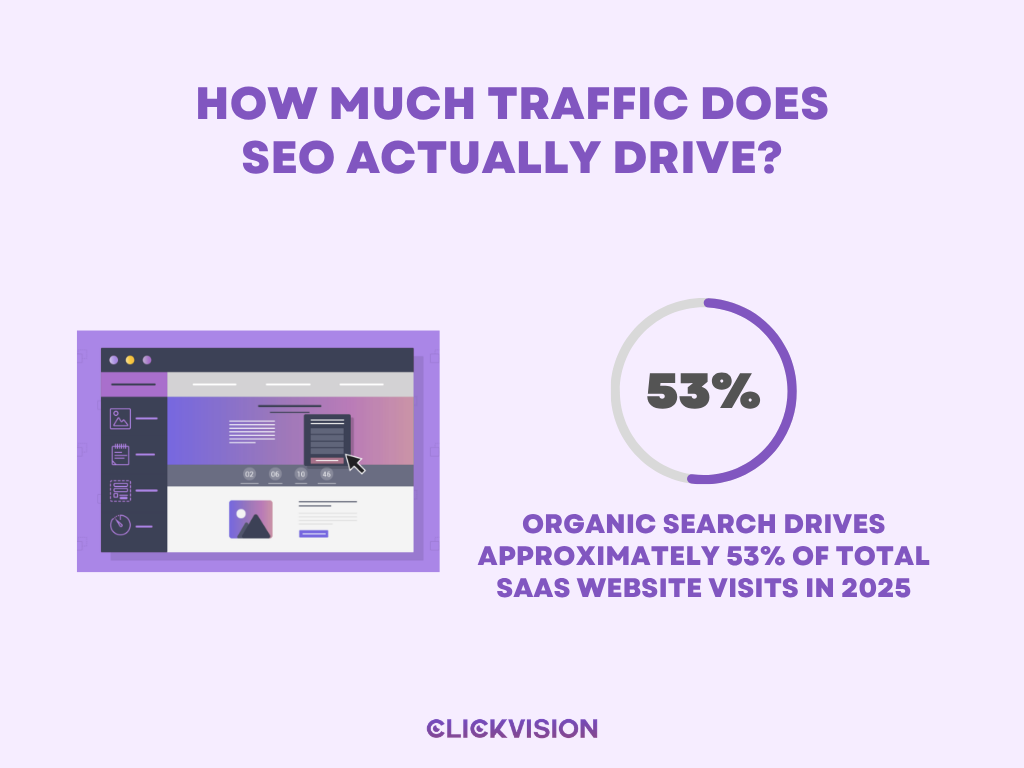
- Organic search drives approximately 53% of total SaaS website visits in 2025, making it the most cost-efficient growth channel. (Almcorp)
- A separate analysis of the top 50 SaaS companies by digital marketing consultant Mike Sonders found organic traffic accounts for 26.4% of traffic – the single largest source of new visitors. (Linkquest)
- 57% of B2B decision makers start their product research using search engines. (Position Digital)
- 83% of B2B buyers conduct self-research before ever speaking to a sales rep. (Position Digital)
- 40% of software buyers spend several weeks or months researching before making a purchase. (Position Digital)
- Organic traffic is on the rise: it accounted for 58% of all web traffic in 2024, an increase of 2.39% throughout the year.
- The #1 organic result on Google has an average click-through rate of 27.6%. Results on page two get just 0.63% of clicks. (Almcorp)
- The top 3 positions collectively capture 54.4% of all clicks on a SERP. SaaS pages in positions 1–3 average a 22% CTR, compared to just 4% for positions 8–10.
- Long-tail keywords now generate 68% of SaaS organic traffic, up from 58% in 2023 – driven by more specific, intent-driven search behavior. (DWI)
- The top 10 pages on an average SaaS site account for nearly 45% of all organic sessions. (DWI)
- Branded keywords account for approximately 35% of total organic visits to established SaaS companies, while non-branded traffic contributes ~65% of new sign-ups. (DWI)
- Mobile organic traffic now makes up 62% of total SaaS visits, continuing to rise each quarter. (DWI)
SEO Performance Benchmarks from the Top 50 SaaS Companies
The benchmark data from Ahrefs’ analysis of 50 leading SaaS companies (February 2026) paints a revealing picture:
- Median organic traffic: 881,000 visits/month (excluding Google and Microsoft).
- OpenAI leads with 151.2 million visits/month; Adobe follows at 126 million.
- At the other end, MicroStrategy receives just 8,700 visits/month – despite holding a DR of 80.
- Median Domain Rating across the top 50: 87, with 21 companies at DR 90+.
- The gap between companies isn’t explained by authority – it’s explained by content investment.
The key insight from this benchmark data: authority alone doesn’t drive traffic. Consistent investment in keyword coverage and content does. Organic visits to a SaaS site can include existing customers looking for login pages or help, so acquisition forecasts should separate these visits from prospective-buyer traffic. Broader Google Search statistics offer context on Google Search as a whole.
SaaS SEO Conversion Rate Benchmarks
Traffic without conversion is a vanity metric—and most SaaS companies are overestimating how well theirs actually performs. These SaaS SEO conversion rate benchmarks reveal where revenue is really won or lost across the funnel. If your conversion rates are below these ranges, your problem isn’t traffic—it’s execution.
- The average SEO conversion rate for B2B SaaS is 2.1% (visitor to lead), compared to just 1% for PPC – meaning SEO converts at more than double the rate while costing less. (Position Digital)
- SEO-sourced leads convert MQL-to-SQL at 51%, versus just 26% for PPC traffic – a nearly 2x improvement in funnel quality. (Olivermunro)
- The average website-to-lead conversion rate for B2B SaaS is 2.3%, with top performers exceeding 10%. (Olivermunro)
- Lead to MQL conversion averages 31%. (Olivermunro)
- MQL to SQL conversion sits at just 13% – the biggest bottleneck in most SaaS funnels. A 5-point improvement here can lift revenue by 18%. (Olivermunro)
- SQL to opportunity ranges from 30–59%; opportunity to customer averages 22–30%.
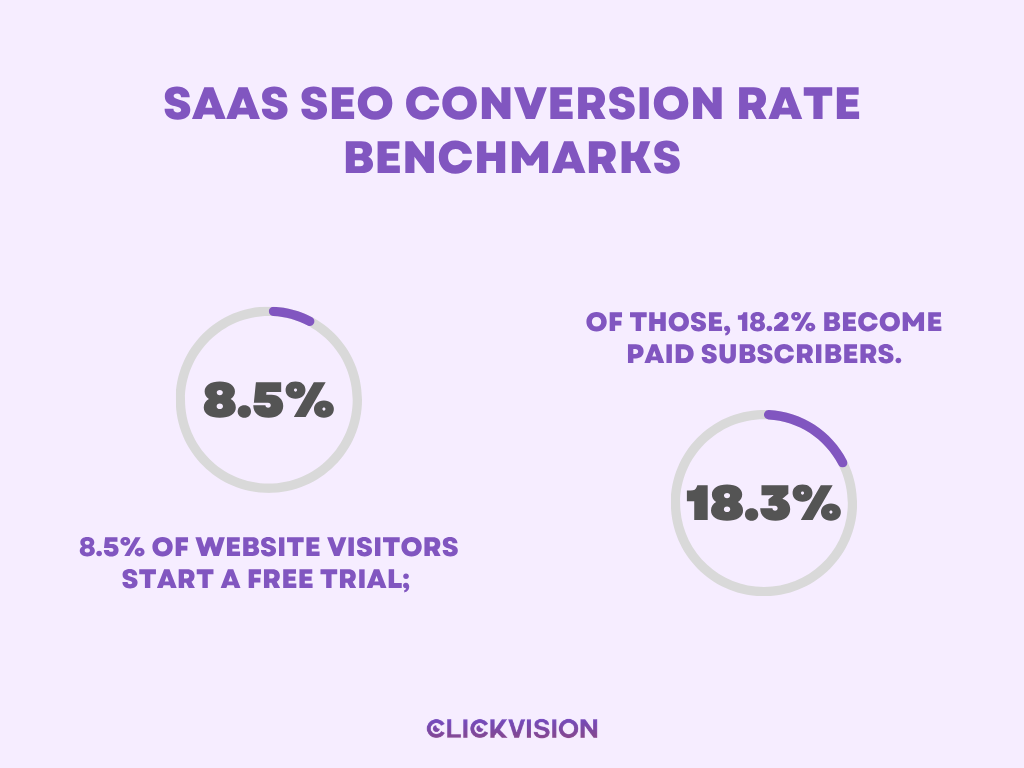
- 8.5% of website visitors start a free trial; of those, 18.2% become paid subscribers. (Olivermunro)
Free Trial Conversion Data
The biggest drop-offs don’t happen at the top of the funnel—they happen when intent is highest. Free trial performance is where conversion efficiency either compounds or breaks.
- Free trials requiring a credit card achieve 30–60% conversion to paid – approximately 5x higher than trials that don’t (Olivermunro)
- Trials without credit card requirements convert at 18–25% free-to-paid. (Olivermunro)
- 7-day trials convert at 40.4%; trials longer than 61 days drop to 30.6% – shorter urgency windows work. (Olivermunro)
- 57% of software products offer a free trial; only 26% offer freemium. (Position Digital)
- Of free trial products, 80% don’t require a credit card upfront, while 20% do. (Position Digital)
- The most common free trial length is 14 days (62%), followed by 7 days and 30 days (both 14%). (Position Digital)
- 1 in 4 new sign-ups are returning subscribers – re-engaging past users is an underutilized growth lever. (Position Digital)
A content download, a demo request, and a free-trial signup represent different levels of buying intent, so SaaS teams should define which actions count as leads before comparing conversion rates. Our lead generation statistics provide broader research on lead generation.
Keyword Strategy: What Works at Scale
Keyword strategy isn’t a tactical decision—it’s what determines whether your SEO scales or stalls. These SaaS keyword strategy statistics show that winning companies don’t just target more keywords—they structure them around intent, conversion, and compounding authority. If your keyword strategy is still built around volume instead of revenue, you’re optimizing for the wrong outcome.
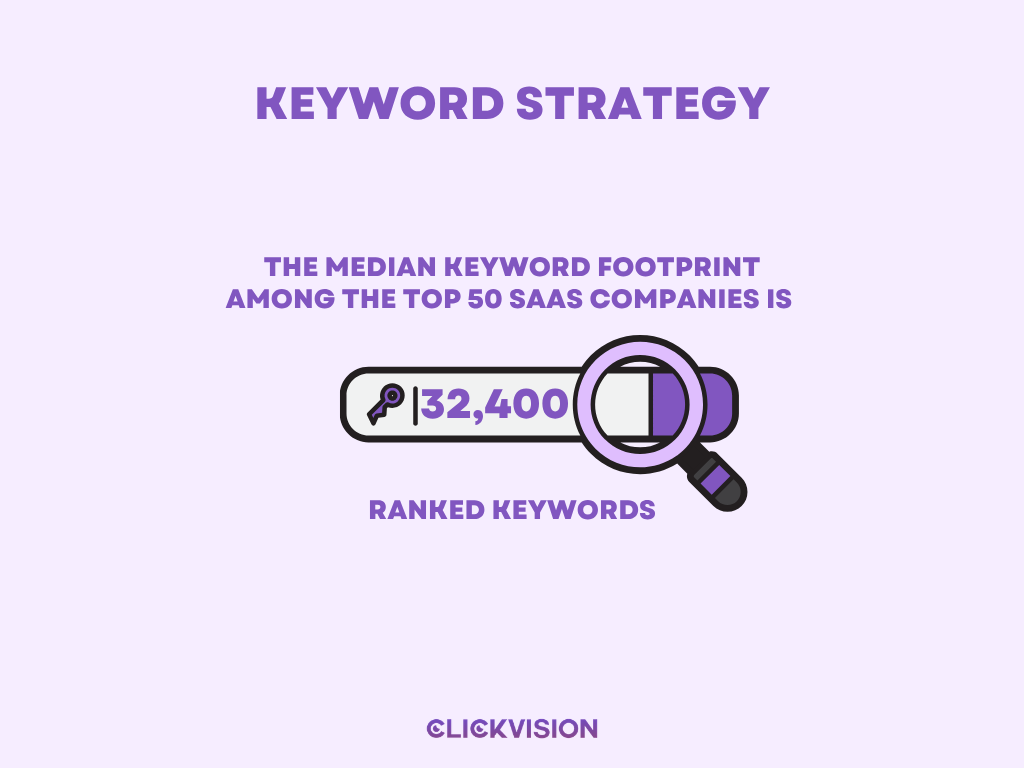
- The median keyword footprint among the top 50 SaaS companies is 32,400 ranked keywords. (Epicslope)
- Adobe ranks for 4.3 million keywords – the largest footprint analyzed. (Epicslope)
- AppLovin ranks for just 810 keywords, yet operates at massive scale – a reminder that keyword breadth isn’t the only path. (Epicslope)
- OpenAI generates approximately 650 visits per keyword, driven largely by brand demand. Zoom averages 157; ADP and Palantir hover around 55–58. (Epicslope)
- High-intent commercial keywords convert 2.3x better than informational keywords for SaaS trials and demos. (DWI)
- Pricing and cost keywords bring 3x higher lead quality compared to generic terms.
- Comparison pages (“Tool A vs. Tool B”) convert 3.2x higher than standard feature or pricing pages. (DWI)
- 40% of SaaS companies: less than 10% of their total content drives over 80% of organic visits – focus compounds.
- SaaS sites using structured data report 25% higher CTRs on average. (DWI)
- Pages optimized for semantic clusters perform 32% better in both visibility and dwell time. (DWI)
- 56% of SaaS marketers now track “topic authority” instead of individual keyword rankings as their primary organic KPI. (DWI)
- The average SaaS company now targets 300–500 keywords per core product area. (DWI)
- Search volumes for “pricing” are about 9x higher than searches for “alternatives” – buyers want cost information first. (DWI)
Content Marketing: The Engine Behind SaaS SEO
Content isn’t just fuel for SEO – it’s the primary revenue driver for SaaS companies that do it well.
- 36% of SaaS companies say content has the biggest impact on revenue growth, ahead of advertising (21%) and partnerships (19%) (Swipe Files).
- Content marketing generates £3 for every £1 invested, compared to £1.80 for paid advertising. (Olivermunro)
- SaaS companies that publish 9+ blog posts monthly increased organic traffic by 35.8% year-over-year. (Olivermunro)
- Sites with original research saw 29.7% organic traffic increases versus 9.3% for those without. (Olivermunro)
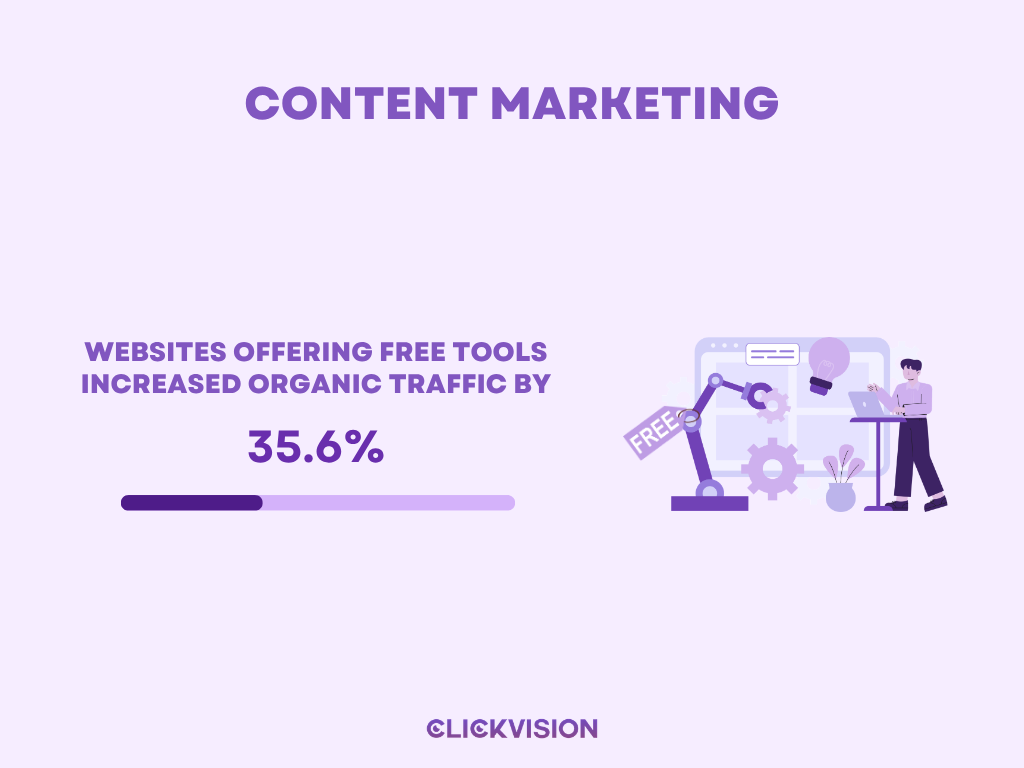
- Websites offering free tools increased organic traffic by 35.6%. (Olivermunro)
- Long-form content (2,000+ words) generates 56% more leads than shorter posts and attracts 77.2% more backlinks. (DWI)
- SaaS blogs that update old posts quarterly grow organic traffic 27% faster than those that don’t refresh. (DWI)
- Top SaaS blogs publishing two or more long-form articles per week average 2.4x faster traffic growth than monthly publishers. (DWI)
- Consistently publishing blogs earns businesses 97% more inbound links than sporadic publishers. (Almcorp)
- 40% of SaaS visitors sign up for a free trial after reading two or more pieces of educational content. (DWI)
- 55% of “hidden” B2B decision makers (procurement, finance, legal) use thought-leadership content as part of their vendor vetting process. (DWI)
- 53% of hidden buyers value expertise over brand recognition – a huge opportunity for lesser-known SaaS brands. (DWI)
Best-Performing Content Types for B2B SaaS
| Content Type | Effectiveness Rating |
| Case studies | 49% say very effective at generating sales |
| General website content | 20% |
| eBooks/whitepapers/reports | 11% |
| Blog posts | 10% |
- 88% of B2B SaaS marketers report positive ROI from proprietary, data-driven research. (Position Digital)
- Data-driven content drives higher conversion rates for 64% of B2B SaaS marketers. (DWI)
- Case studies produce an average 7% visitor-to-lead rate – the highest of any content type. (DWI)
- 83% of SaaS companies produce use case stories; 82% use the Challenge/Solution/Results structure. (Position Digital)
- 72% of SaaS case studies are written format; only 28% are video, primarily due to cost and customer willingness. (DWI)
- SaaS companies that hired a content agency produced 67% more case studies than those writing in-house. (DWI)
- Only 27% of SaaS brands have dedicated content designed for each stage of the buyer journey – a significant gap and opportunity. (DWI)
- Top-performing content teams repurpose every core article into 4–6 new formats, multiplying lead flow by up to 3x. (DWI)
When AI helps draft SaaS content, verify product features, plan limits, and integration claims against current documentation before publication. Broader research on AI-assisted writing is collected in our AI writing statistics.
Domain Authority & Backlinks: What the Data Says
Domain authority isn’t a vanity metric—it’s a gating factor for whether you rank at all. These SaaS backlink statistics show that without sustained link acquisition, even great content struggles to compete. If you’re underinvesting in backlinks, you’re effectively capping your organic growth before it starts.
- Backlinks remain one of the top three ranking factors in Google’s algorithm. (DWI)
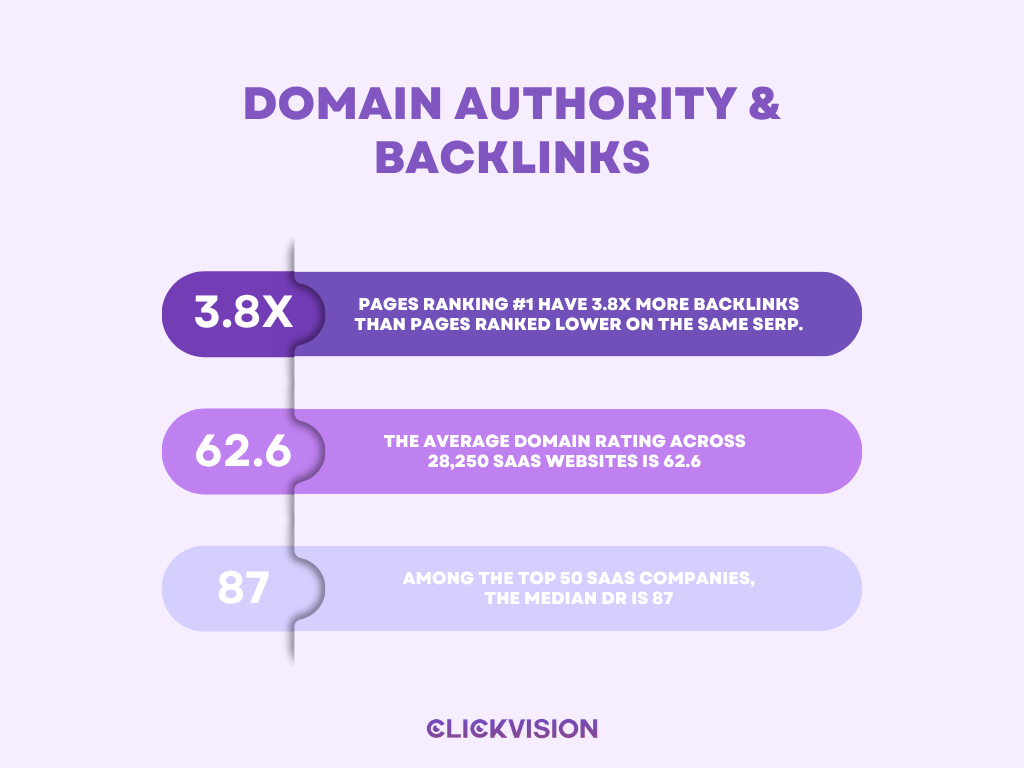
- Pages ranking #1 have 3.8x more backlinks than pages ranked lower on the same SERP. (Almcorp)
- Businesses that blog consistently earn 97% more inbound links than those that don’t publish regularly. (Almcorp)
- The average Domain Rating across 28,250 SaaS websites is 62.6. (Linkquest)
- Mobile credit card processing software has the highest average DR at 76.3; job costing software the lowest at 10.9. (Linkquest)
- Among the top 50 SaaS companies, the median DR is 87, with 21/50 at DR 90+.
- Yet high DR alone doesn’t predict traffic: F5 (DR 93) gets 306K visits/month; Procore (DR 82) gets 1.05M. (Epicslope)
- SaaS companies with 500+ referring domains outperform competitors by 80% in keyword visibility.
- The average SaaS site earns 25–60 new backlinks per month with consistent content publishing.
- 70% of SaaS backlinks point to blog content, not product or pricing pages. (Epicslope)
- 60% of all SaaS backlinks come from sites with DR 40+. (Epicslope)
- SaaS companies allocate 20–25% of their SEO budget directly to link building. (DWI)
- Pages that attract backlinks consistently over six months hold their rankings three times longer. (DWI)
- After 9 years, 66.5% of backlinks are dead – link rot makes ongoing link building a necessity, not a one-time task. (DWI)
- Content marketing (68%) and guest posting (47%) are the two most popular link building strategies. (Linkquest)
- 62% of technology marketers say case studies produce the best link building results; research reports (53%) and video (52%) follow. (Linkquest)
- 1 in 4 SaaS companies now uses journalist outreach platforms to secure media backlinks. (DWI)
- SaaS companies performing quarterly backlink audits detect 9–12% broken or lost links each cycle. (DWI)
- Regaining a lost high-quality backlink recovers 70–80% of the original page’s traffic impact. (DWI)
Email Marketing in B2B SaaS: Still Punching Above Its Weight
Email often gets underestimated in the SEO conversation, but its role in converting SEO-generated leads is critical.
- Email marketing generates £36–40 for every pound spent – a 3,600–4,000% ROI. (Olivermunro)
- 59% of B2B marketers name email as their most effective revenue channel. (Olivermunro)
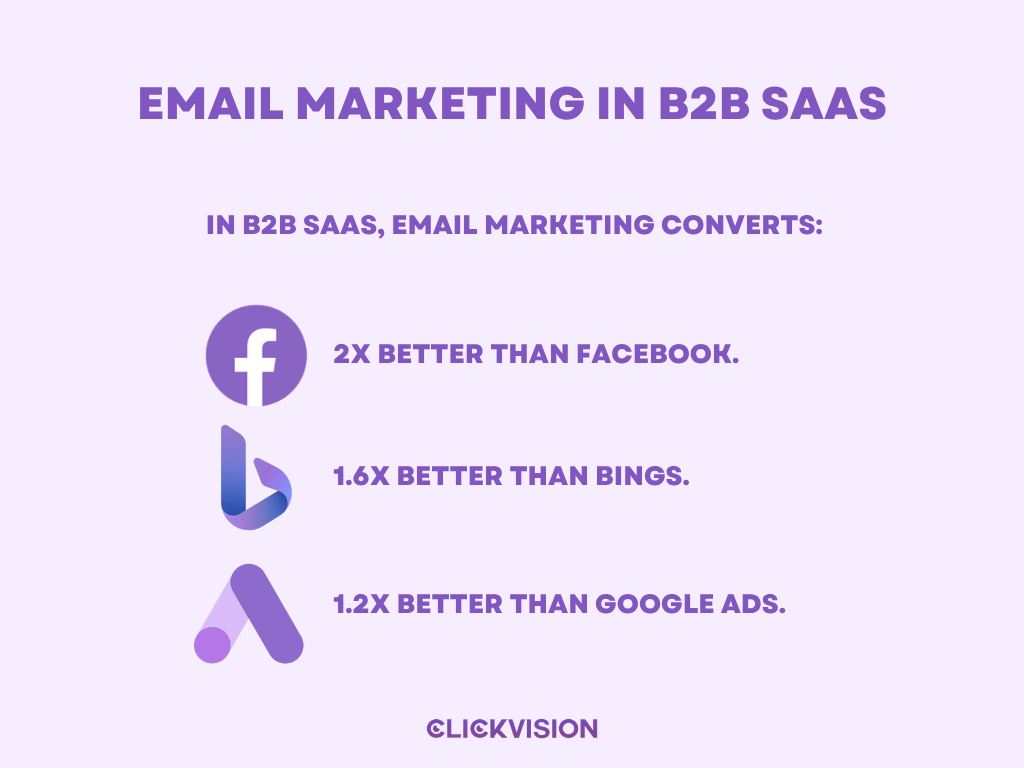
- In B2B SaaS, email marketing converts 2x better than Facebook, 1.6x better than Bing, and 1.2x better than Google Ads. (Position Digital)
- It converts 19% worse than LinkedIn Ads – LinkedIn is the exception, not the rule.
- The average email open rate in B2B SaaS is 21% (25% for inbound, 15% for outbound). (Position Digital)
- The average CTR is 3.1% (inbound at 4.1%, outbound at 1.67%). (Position Digital)
- Welcome emails hit 83.63% open rates and 16.60% CTR – onboarding sequences are the highest-leverage email use case. (Olivermunro)
- Personalised subject lines increase open rates by 26%; advanced segmentation can drive a 760% increase in revenue. (Olivermunro)
- Automated emails drive 37% of all email-generated sales despite making up just 2% of total email volume. (Olivermunro)
- 94% of B2B SaaS emails are sent before any pipeline qualification – most companies are still using email primarily as a top-of-funnel, awareness channel. (Position Digital)
Before using AI to prioritize SEO-generated leads, define what qualifies a prospect in terms of product fit and buying intent. Then assess whether its selections become sales-accepted opportunities. Our AI lead generation statistics collect broader research on AI in lead generation.
Paid Search in SaaS: Complement, Not Replacement
Paid search can accelerate growth — but it can’t sustain it on its own. These SaaS paid search statistics show that while paid channels drive immediate results, they become increasingly expensive and less defensible over time. If your growth depends heavily on paid, you’re renting demand instead of building it.
- 45 out of 50 of the world’s top SaaS companies run paid search campaigns. (Epic Slope)
- Companies running zero paid search include OpenAI, Palantir, Oracle, and Veeva Systems – all relying primarily on organic demand and brand strength. (Epic Slope)
- LinkedIn ROI (113%) now exceeds Google Ads (78%) for B2B SaaS, despite higher CPCs.(Olivermunro)
- LinkedIn’s share of B2B ad budgets grew from 31% to 39% in 2024, making it the largest single advertising platform by spend. (Olivermunro)
- The average CPC on LinkedIn ranges from £5.58 to £10.00, spiking to £15.72 in Q3. (Olivermunro)
- Google Ads average CPC rose 29% (from £4.13 to £5.34) for non-branded B2B SaaS search. (Olivermunro)
- The average B2B customer journey takes 211 days and requires 76 touches before purchase – paid alone can’t carry that. (Olivermunro)
- Major AI platforms are increasingly citing LinkedIn content when answering professional queries: 26% of citations come from posts, 14.5% from profiles, 8.9% from long-form articles. (Position Digital)
Paid search can provide an initial test of messaging and demo demand for a commercial keyword before a SaaS team commits to a larger SEO content investment. For a broader channel comparison, see our SEO vs. PPC statistics.
The AI Search Revolution: What SaaS SEOs Need to Know Now
This is the section that changes everything about how SEO worked even two years ago.
- 89% of B2B buyers already use AI tools to research products and services (Forrester).
- Over 60% of SaaS marketers say AI-driven search results have already affected their organic traffic patterns. (DWI)
- Roughly 40% of SaaS companies report a visible CTR drop due to Google’s AI Overviews appearing above traditional listings. (Olivermunro)
- A Seer Interactive study found AI Overviews caused a 70% drop in CTR for organic results and a 12% drop for paid results on affected queries. (Olivermunro)
- SaaS companies targeting informational content have seen an average 18% decline in page visits since AI-generated snippets became common. (Olivermunro)
- ~30% of SaaS traffic loss in early 2025 is attributed to “position zero” displacement by AI answers. (Olivermunro)
- 19.56% of the top 20 Google results are now AI-generated. (Olivermunro)
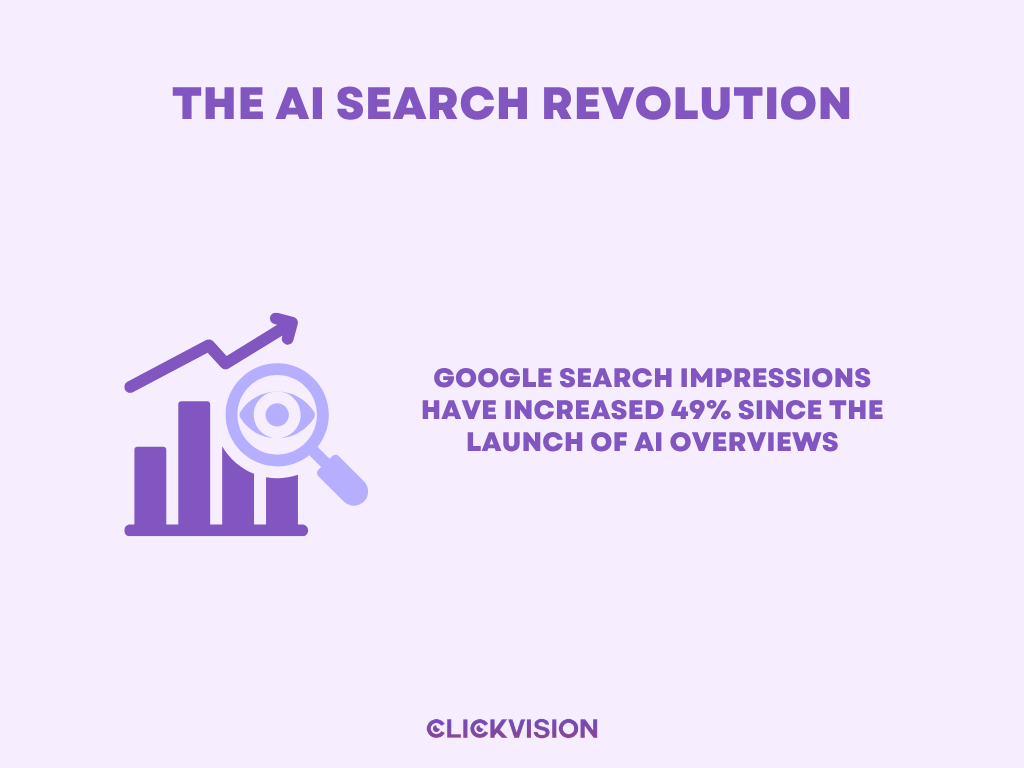
- Google search impressions have increased 49% since the launch of AI Overviews – more impressions, fewer clicks. (Olivermunro)
- Only 15% of top 500 SaaS domains appear inside AI Overviews, up from just 4% at the end of 2023. (DWI)
- SaaS companies using schema markup and FAQ structures are 35% more likely to appear in AI-driven summaries. (DWI)
- 58% of SaaS sites publishing deep thought-leadership report stable traffic despite AI changes. (DWI)
- 72% of SaaS teams believe AI summaries will reduce organic impressions for top-ranking pages over the next year. (DWI)
- 8 out of 10 SaaS content teams now include AEO (Answer Engine Optimization) in their keyword strategy planning. (DWI)
- AI-generated summaries are expected to cover 70–80% of informational SaaS queries within the next two years. (DWI)
- Only 21% of SaaS companies currently optimize their metadata specifically for conversational queries or AI summary triggers – a major gap. (DWI)
- 46% of SaaS SEOs now track “AI citation visibility” – how often their brand appears as a cited source in AI responses. (DWI)
- 67% of SaaS leaders believe Google’s AI Overviews favor branded or expert-level content over general articles. (DWI)
A drop in your site’s organic CTR does not, by itself, establish a rise in zero-click searches; users may have clicked another website. Our zero-click search statistics collect broader research on searches that end without an external visit.
What Holds Up in the AI Search Era
The data consistently points to one conclusion: the fundamentals of great SEO align almost perfectly with what AI systems prefer to cite.
- Well-structured content with clear headings and direct answers to specific questions
- Named authors with demonstrable credentials and genuine subject matter expertise
- Factual accuracy with specific data points and citations
- Comprehensive topical coverage that leaves no question unanswered
- Strong domain authority supported by quality backlinks
- Brand presence on third-party review sites, directories, and press coverage
When tracking SaaS brand citations, keep the buying questions consistent over time; broader research on AI and search optimization is collected in our AI SEO statistics.
SaaS SEO by Category: How Industry Shapes Organic Potential
Not all SaaS categories are created equal in search.
Cybersecurity:
- Cloudflare leads at 7.2M organic visits/month with 159,000 keywords. (Epic Slope)
- Fortinet generates 3.4M visits/month with 127,000 keywords. (Epic Slope)
- Companies investing in educational content explaining threats and concepts pull ahead.
Horizontal SaaS:
- Salesforce drives 8.6M visits/month with 276,000 keywords – slightly ahead of HubSpot. (Epic Slope)
- HubSpot generates 4.2M visits/month with 224,000 keywords. (Epic Slope)
- These are the “content engine” brands with decades of publishing investment.
Vertical SaaS (the surprise performers):
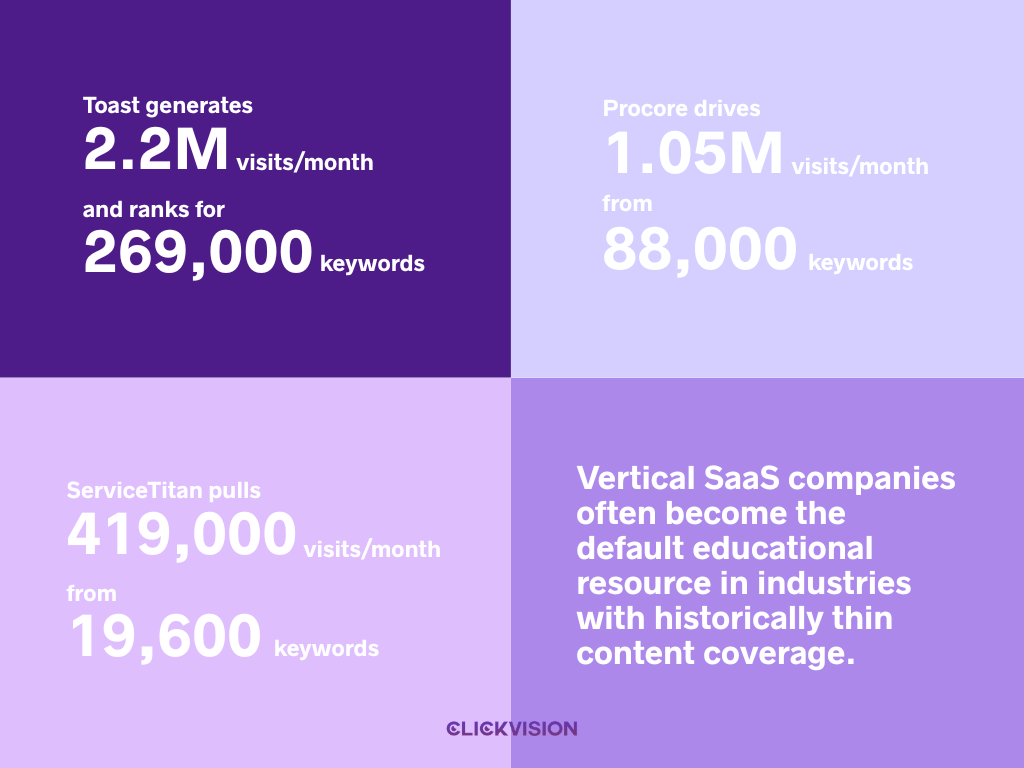
- Toast generates 2.2M visits/month and ranks for 269,000 keywords. (Epic Slope)
- Procore drives 1.05M visits/month from 88,000 keywords. (Epic Slope)
- ServiceTitan pulls 419,000 visits/month from 19,600 keywords. (Epic Slope)
- Vertical SaaS companies often become the default educational resource in industries with historically thin content coverage.
Data & Analytics:
- MongoDB: 1.1M visits/month largely from documentation and tutorials. (Epic Slope)
- Databricks: 945K visits/month; Snowflake: 548K. (Epic Slope)
Most searched SaaS categories by monthly search volume (Ahrefs data):
| Category | Monthly Search Volume |
| Accounting software | 5,400 |
| CRM software | 4,800 |
| Project management software | 2,900 |
| ERP software | 2,800 |
| HR software | 1,800 |
Retention, Expansion, and the Metrics That Actually Matter
SaaS SEO doesn’t stop at acquisition—it directly influences retention, expansion, and overall revenue quality. These SaaS retention and expansion statistics show that how you acquire customers shapes how long they stay and how much they’re worth. If your SEO strategy is attracting the wrong audience, you’re not just wasting traffic—you’re increasing churn.
- Median NRR across B2B SaaS is 106%; top performers exceed 120% and grow 2.5x faster than low-NRR companies. (Olivermunro)
- Expansion ARR now represents 40% of total new ARR, up 5 percentage points year-over-year. (Olivermunro)
- For companies above £50M ARR, expansion ARR exceeds 50% of total new ARR. (Olivermunro)
- 75% of software companies reported declining retention rates in 2024. (Olivermunro)
- Involuntary churn averages 0.8%, but fixing it through automated payment retry logic can lift revenue by 8.6% in year one. (Olivermunro)
- 73% of B2B decision makers trust peer recommendations over vendor websites (55%), search engines (54%), review sites (46%), AI chatbots (39%), and social media (36%). (Position Digital)
- 32% of software buyers use Reddit to research products – 77% for reviews, 45% for pricing research, 42% for feature comparisons. (Position Digital)
- 55% of B2B buyers struggle to find trustworthy product information. (Position Digital)
Online Communities and Peer Trust: The Dark Funnel of SaaS SEO
SEO no longer happens only on your website—it happens wherever buyers form opinions. These SaaS dark funnel statistics show that peer-driven platforms and communities are now shaping purchase decisions before prospects ever reach your site. If you’re not visible and credible in these spaces, you’re losing deals you don’t even know you were in.
- B2B buyers trust peer recommendations more than vendor websites, search engines, AI chatbots, and social media combined. (Position Digital)
- Reddit is now a significant research platform: 32% of software buyers use it to evaluate solutions. (Position Digital)
- Claiming and optimizing profiles on aggregator sites like G2, Capterra, and TrustRadius is an increasingly important SEO-adjacent strategy. (Sure Oak)
- These platforms capture high-intent searches and often outrank vendor sites for competitive terms.
- Review signals from these platforms are also increasingly referenced by AI search tools when generating vendor recommendations.
These SaaS dark funnel statistics make it clear: trust is built off-site, and SEO now extends far beyond your own domain. The companies that win aren’t just ranking in Google—they’re showing up in conversations, reviews, and community-driven platforms where buyers validate decisions. If your strategy ignores this layer, you’re optimizing for visibility without influence.
Key Takeaways: What the Data Tells Us
- SEO delivers 702% ROI for B2B SaaS with a 7-month break-even – no other channel comes close on a risk-adjusted basis.
- Organic search drives 44–53% of SaaS website traffic and is the single largest revenue channel.
- SEO costs 40% less than paid acquisition and converts at 2x the rate.
- Authority alone doesn’t drive traffic – the top 50 SaaS companies’ data proves this. Consistent content investment is the differentiator.
- AI search is reshaping the landscape – informational content is losing clicks, but authoritative, well-structured, thought-leadership content is holding steady or gaining.
- Bottom-of-funnel content converts best – comparison pages, pricing content, and integration pages should be prioritized before top-of-funnel volume plays.
- Case studies are the highest-converting content type for B2B SaaS – both for lead generation and link building.
- Retention and expansion are the new growth levers – SEO that supports onboarding, product adoption, and customer success contributes to NRR just as much as acquisition.
- Schema markup, clear structure, and named expertise are now table stakes for AI search visibility.
- Email and LinkedIn remain the strongest paid/owned channels to complement organic growth.
Conclusion
The data is unambiguous: for SaaS companies operating in competitive markets with rising paid acquisition costs, SEO is not a nice-to-have. It’s the most financially defensible growth channel available.
The companies winning in organic search today didn’t get there by luck or by following a single tactic. They built structured content programs, earned authority through consistent publishing and link building, adapted their strategies as AI search emerged, and measured the metrics that actually connect to revenue.
What separates the 7.2M-visit Cloudflares from the 8,700-visit MicroStrategies isn’t domain authority – it’s the decision to treat SEO as core infrastructure rather than a side channel.
If this data helped you build the case for investment, sharpen your strategy, or benchmark your current performance, share it with your team. And if you’re looking to put these numbers to work, explore how Clickvision helps SaaS companies build the organic growth engines behind numbers like these.